Description
The rapid evolution of the Internet of Things (IoT) has fundamentally transformed
how digital systems interact with the physical world, giving rise to a new era of smart
and connected ecosystems. From intelligent cities and healthcare systems to
industrial automation, agriculture, energy management, and transportation, nextgeneration IoT technologies are redefining efficiency, sustainability, and human–
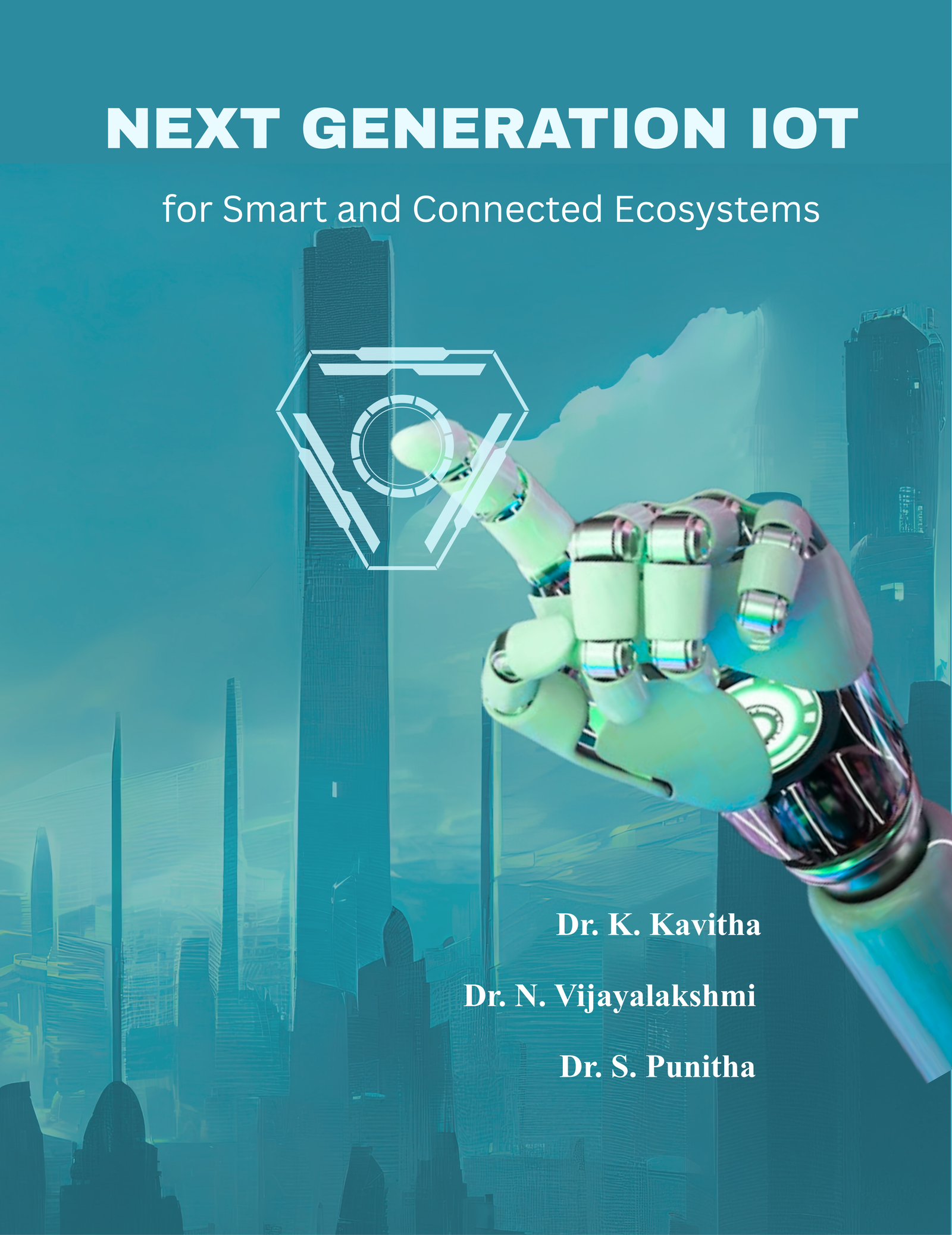
machine collaboration. This book, Next Generation IoT for Smart and Connected
Ecosystems, aims to provide a comprehensive and forward-looking perspective on
the architectures, technologies, and applications that are shaping this transformation.
Traditional IoT systems, while effective in early deployments, face significant
limitations related to scalability, interoperability, security, latency, and energy
efficiency. The emergence of advanced paradigms such as edge and fog computing,
artificial intelligence at the edge, blockchain-enabled trust models, 5G and beyond
communication networks, and context-aware intelligence has paved the way for more
adaptive, resilient, and autonomous IoT ecosystems. These next-generation IoT
frameworks are not merely extensions of existing systems but represent a shift toward
intelligent, self-organizing, and human-centric digital environments.
This book brings together theoretical foundations, system architectures, and realworld applications to bridge the gap between academic research and practical
deployment. It explores key enabling technologies, including intelligent sensing,
distributed learning, secure data sharing, adaptive resource management, and
interoperability frameworks, while also addressing critical challenges such as privacy
preservation, cyber resilience, ethical considerations, and sustainable design.
Emphasis is placed on cross-domain integration, where IoT systems collaborate
seamlessly across heterogeneous platforms to create cohesive smart ecosystems.